What is Single Origin Coffee?
6 min read
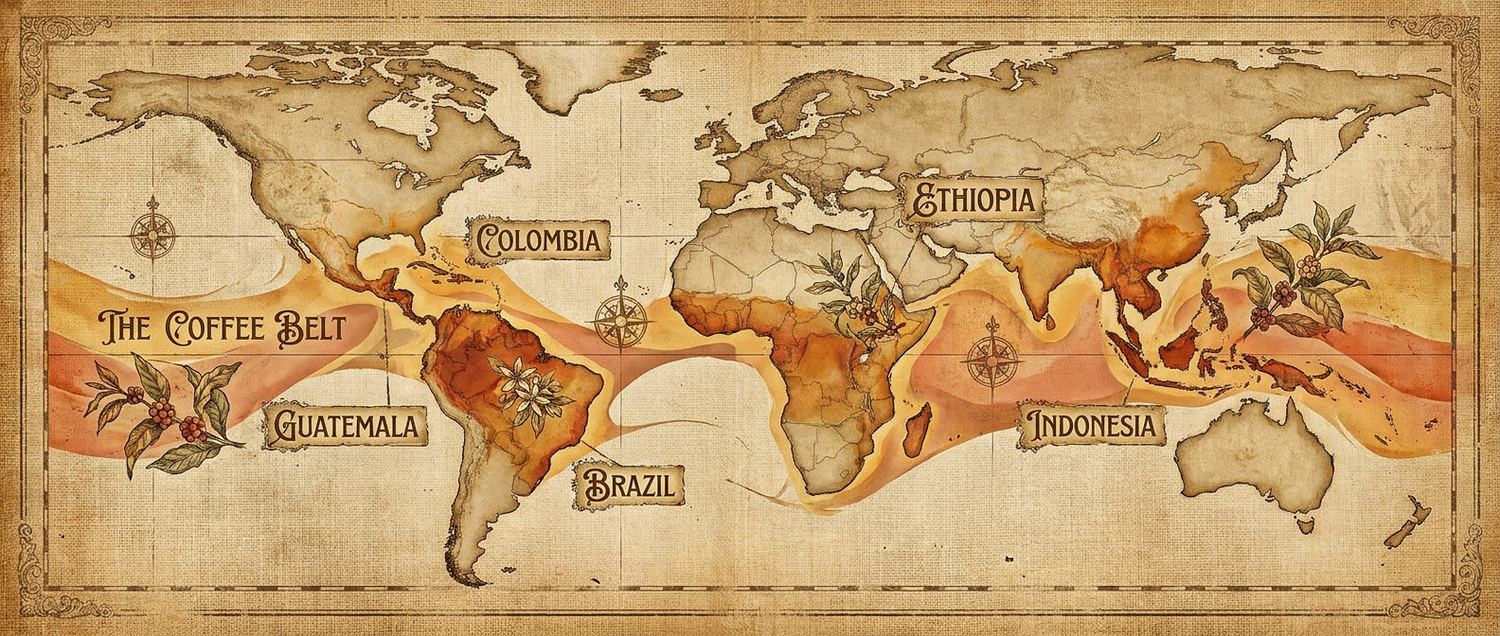
You have seen "single origin" on bags and menus everywhere — but what does it actually mean, why does it cost more, and is it really better than a blend? Here is everything you need to know to choose confidently.
The Definition
Single origin coffee comes from one specific geographic source — a single country, region, farm, or even a single lot within a farm. This contrasts with blends, which combine beans from multiple origins to achieve a consistent flavor profile. The term has no legal definition, so specificity varies: a "Colombian" coffee is technically single origin, but a "Finca El Paraiso, Cauca, Colombia, Lot #7" gives you far more traceability and usually higher quality.
Why Single Origin Matters
Coffee is an agricultural product, and like wine, its flavor reflects where and how it was grown — the terroir. Soil minerals, altitude, rainfall, temperature, shade cover, and processing method all contribute unique characteristics. Single origin coffee preserves these characteristics so you can taste the place. A blend merges them together. Neither is inherently better — they serve different purposes.
Single Origin vs. Blend: The Trade-off
Blends are designed for consistency and balance. Roasters combine origins that complement each other — one for sweetness, one for body, one for brightness. The blend tastes the same year-round. Single origins are seasonal and variable. They offer uniqueness, complexity, and transparency, but they change with each harvest. If you value predictability and a familiar morning cup, blends serve well. If you value discovery and nuance, single origins are more rewarding.
How to Read a Single Origin Label
The more information on the label, the more intentional the sourcing. Look for: country and region (baseline), farm or cooperative name (better), variety/cultivar (e.g., SL28, Gesha, Bourbon), processing method (washed, natural, honey), altitude (meters above sea level), and harvest date. A label that includes most of these details typically indicates a specialty-grade coffee sourced through direct trade or quality-focused importers.
Processing Methods Shape Flavor
After harvesting, coffee cherries are processed to remove the fruit from the seed (the bean). The method has a dramatic impact on flavor. Washed (wet) processing produces clean, bright, acidic cups that highlight the inherent qualities of the bean and terroir. Natural (dry) processing leaves the cherry fruit intact during drying, fermenting sugars into the bean and producing fruity, wine-like, sometimes funky flavors. Honey processing is a middle ground — some fruit remains, producing sweetness and body with moderate clarity.
Best Brewing Methods for Single Origin
To appreciate what makes a single origin unique, brew it with a method that provides clarity. Pour over (V60, Chemex) and AeroPress with a paper filter are ideal — they strip away oils and sediment, letting the delicate origin characteristics shine. French press and espresso work too, but they add body and intensity that can mask subtle tasting notes. If you are drinking a $25/12oz bag of competition-lot Gesha, pour over is the way to honor it.
Is Single Origin Worth the Price?
Single origin coffees cost more because they require more labor-intensive sourcing, careful lot separation, seasonal availability, and relationship-driven trade. You are paying for traceability, quality, and the farmer receiving a fair price. If you drink coffee primarily for the caffeine and comfort, a quality blend offers excellent value. If coffee is a sensory hobby and you enjoy exploring flavors the way a wine enthusiast explores varietals, single origin is absolutely worth it.