Pour-Over vs. Drip: What's the Difference?
6 min read
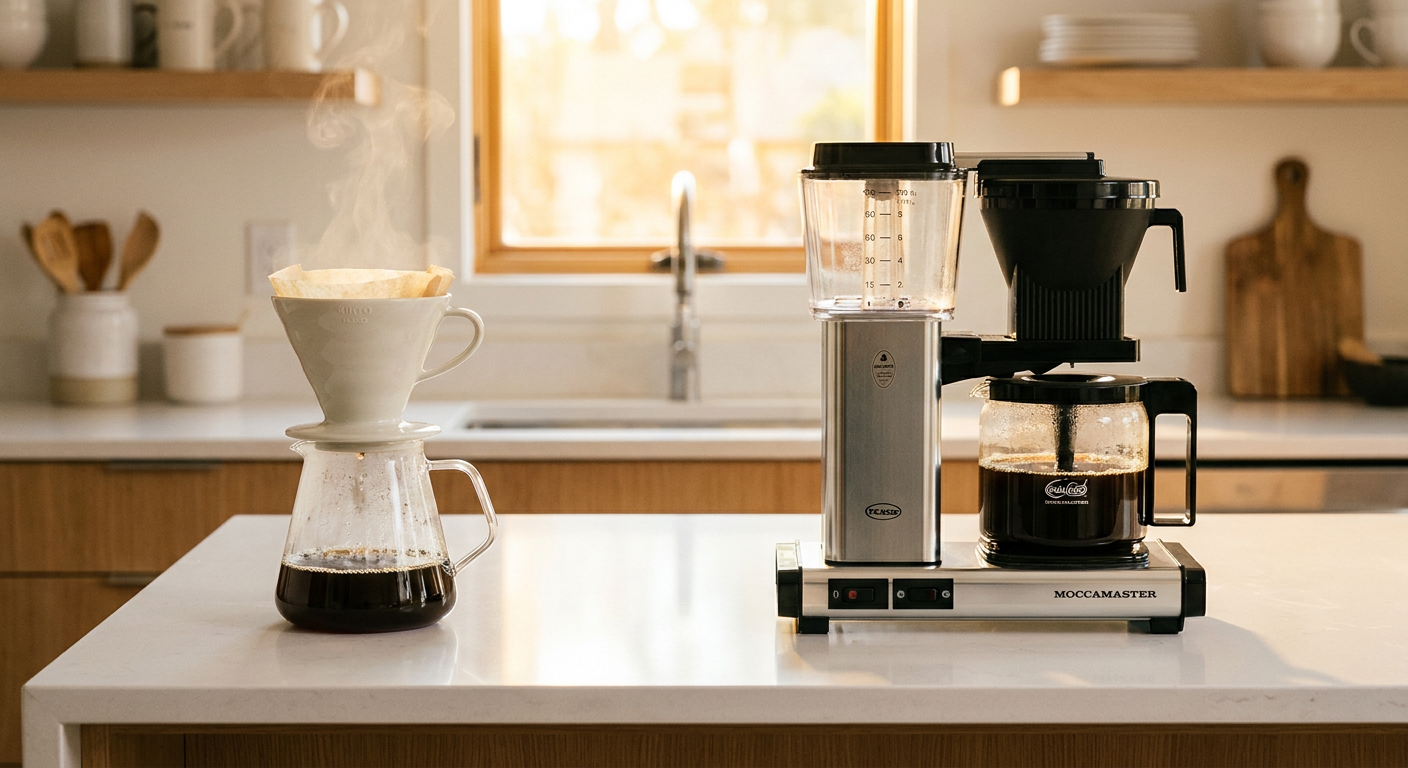
Both pour-over and automatic drip use gravity and paper filters to brew coffee — yet they produce distinctly different cups. Understanding what separates them helps you choose the method that fits your priorities, whether that is speed, control, or flavor clarity.
The Core Difference: Control
Automatic drip machines heat water and distribute it over the grounds on a fixed schedule. You choose the coffee and the grind size, but the machine controls water temperature, flow rate, and pour pattern. Pour-over puts every variable in your hands — you control the temperature, pour speed, agitation, bloom time, and total brew time. This control is what produces better extraction consistency and a more nuanced cup, but it demands more attention.
Flavor Clarity
Pour-over coffee is prized for its clarity — the ability to taste individual flavor notes distinctly. Because you control the pour pattern and extraction time precisely, you can highlight the sweet spot where sugars, acids, and aromatics are in balance. Drip machines often over-extract or under-extract portions of the bed because their shower heads distribute water unevenly. The result is still good coffee, but with muddier, less defined flavors.
Convenience vs. Craft
The drip machine wins on convenience. Add grounds, press a button, walk away. Coffee is ready in 5–8 minutes with no babysitting. Pour-over takes 3–5 minutes of active pouring — you stand at the counter with a kettle, timing your pours. For busy mornings or serving multiple people, drip is practical. For a weekend ritual or when you want to fully experience a special single-origin coffee, pour-over is worth the effort.
Water Temperature
Most automatic drip machines heat water to a range of 195–205°F, but cheaper models often under-heat (below 190°F), which leads to under-extraction and flat, sour coffee. With pour-over, you heat water yourself — a variable-temperature kettle gives you exact control. This is especially important for light roasts, which need higher temperatures to extract properly. If your drip machine coffee tastes chronically weak or sour, temperature may be the culprit.
Best Drip Machines That Rival Pour-Over
Not all drip machines are equal. SCA-certified brewers (like the Breville Precision Brewer, Technivorm Moccamaster, and OXO Brew 9-Cup) are tested to hit proper temperature, flow rate, and brew time. These machines produce cups that approach pour-over quality while maintaining push-button convenience. If you want great coffee without the manual ritual, investing in a certified brewer is the best compromise.
Which Should You Choose?
Choose pour-over if you enjoy the process, want maximum flavor clarity, drink single-origin specialty coffee, and typically brew 1–2 cups at a time. Choose drip if you prioritize speed, brew for multiple people, or simply want consistent good coffee without a learning curve. Many serious coffee drinkers own both — pour-over for the weekend ritual and a quality drip machine for weekday mornings.