Best Coffee for French Press
6 min read
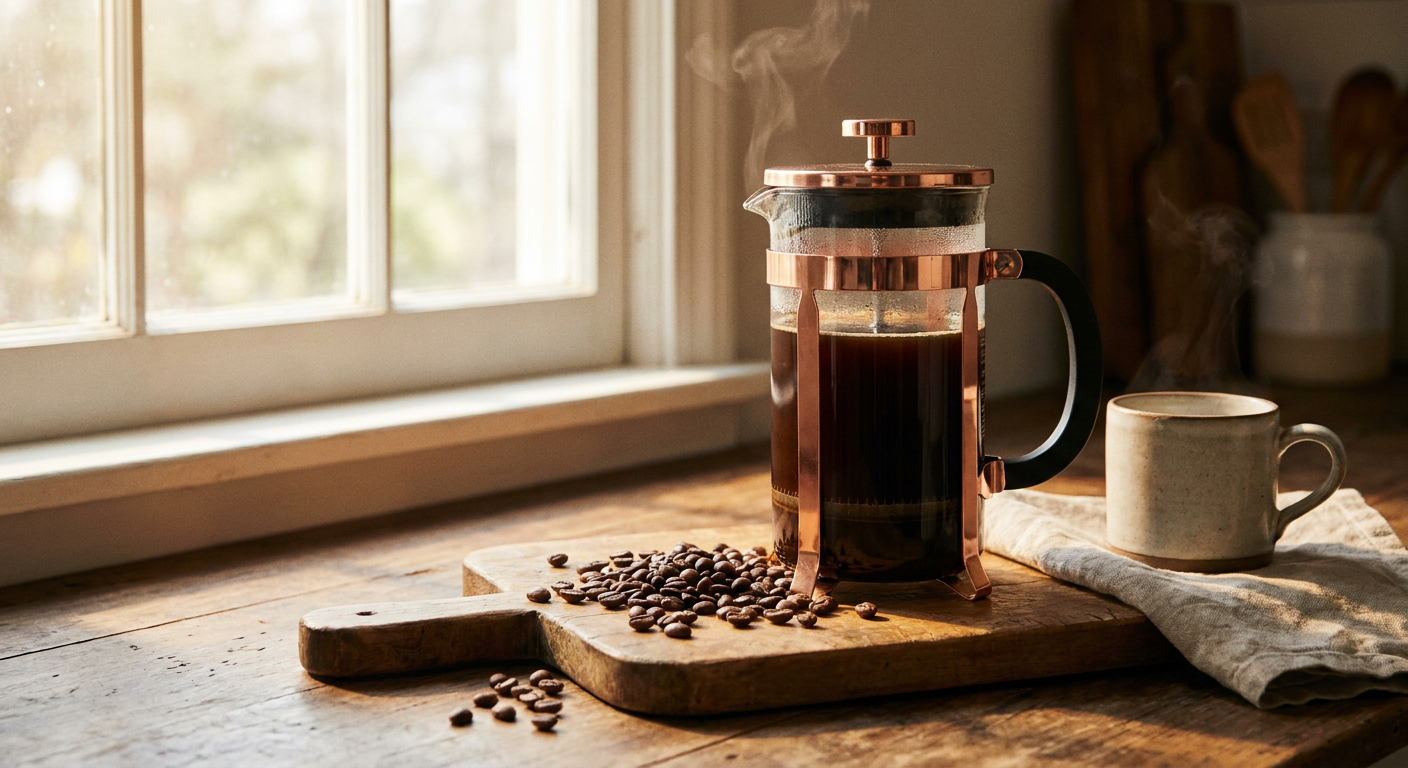
The French press is loved for its simplicity and the rich, full-bodied cup it produces. But not all coffees shine in a French press. Here is how to choose beans that work with — not against — this brewing method.
How the French Press Brews Differently
The French press is a full-immersion brewer with a metal mesh filter. Two things make it unique: first, the coffee grounds steep in water for the full brew time (usually 4 minutes), giving a longer extraction window than drip or pour over. Second, the metal filter allows oils and fine particles into the cup that paper filters would trap. This produces a heavier body, richer mouthfeel, and a slightly less "clean" cup compared to paper-filtered methods. Choosing beans that complement these characteristics is key.
Choose Medium to Dark Roasts
The French press amplifies body and mutes brightness. Light-roast, high-acid coffees that taste spectacular as pour over can taste muted, flat, or oddly savory in a French press because the full immersion and metal filter do not highlight their delicate acidity. Medium and medium-dark roasts with naturally low acidity and heavy body are ideal. These roasts have more developed sugars (caramel, chocolate) and less sharp acidity — exactly what the French press rewards.
Best Origins for French Press
Brazilian coffees are the quintessential French press bean — nutty, chocolatey, low-acid, full-bodied. Sumatran and other Indonesian coffees bring earthy, spicy, heavy-bodied complexity that the French press extracts beautifully. Colombian coffees (particularly from Huila or Nariño) provide balanced sweetness and moderate body. Guatemalan coffees from Antigua offer rich chocolate and brown sugar notes that become silky in the French press. Avoid bright Kenyan, Ethiopian Yirgacheffe, or other high-acid, floral coffees for this method.
Flavor Profiles That Shine
Look for tasting notes that lean toward: chocolate (milk or dark), nuts (hazelnut, almond, walnut), caramel, brown sugar, dried fruit, spice (cinnamon, clove), and earthy/woody. These compound groups are fat-soluble — they pass through the metal filter into your cup and create the satisfying richness the French press is known for. Fruity, floral, and citrus notes (water-soluble acids) tend to get lost or taste muddy in full immersion.
Grind Size: Coarse and Consistent
Use a coarse, even grind — about the size of coarse sea salt. This is critical for two reasons: coarse grounds prevent over-extraction during the 4-minute steep, and they are large enough that the metal mesh filter separates them cleanly when you press. Fine grounds slip through the mesh, making your coffee silty, muddy, and over-extracted. If you are getting sediment in your cup, your grind is too fine. A quality burr grinder makes the biggest difference here.
The Perfect French Press Technique
Use a 1:15 ratio (e.g., 60g coffee to 900ml water). Heat water to 200°F (93°C) — just off the boil. Add coffee to the press, pour all the water at once, and stir gently to ensure all grounds are saturated. Place the lid on (plunger up) and wait exactly 4 minutes. Press the plunger slowly and steadily — rushing it forces fine particles through the filter. Pour all the coffee immediately into cups or a carafe; leaving it in the press continues extraction.
Our French Press Recommendations
At Sunset Brews, our blends are specifically roasted with body-forward brewing methods in mind. Our medium and dark roast blends — with their chocolate, caramel, and nut-forward profiles — are designed to produce exceptional French press results. For single origin fans, try our Brazilian or Colombian offerings. Pair with whole bean (grind fresh at home) for the best results, or select the coarse pre-ground option at checkout.