Mushroom Coffee Benefits Explained
7 min read
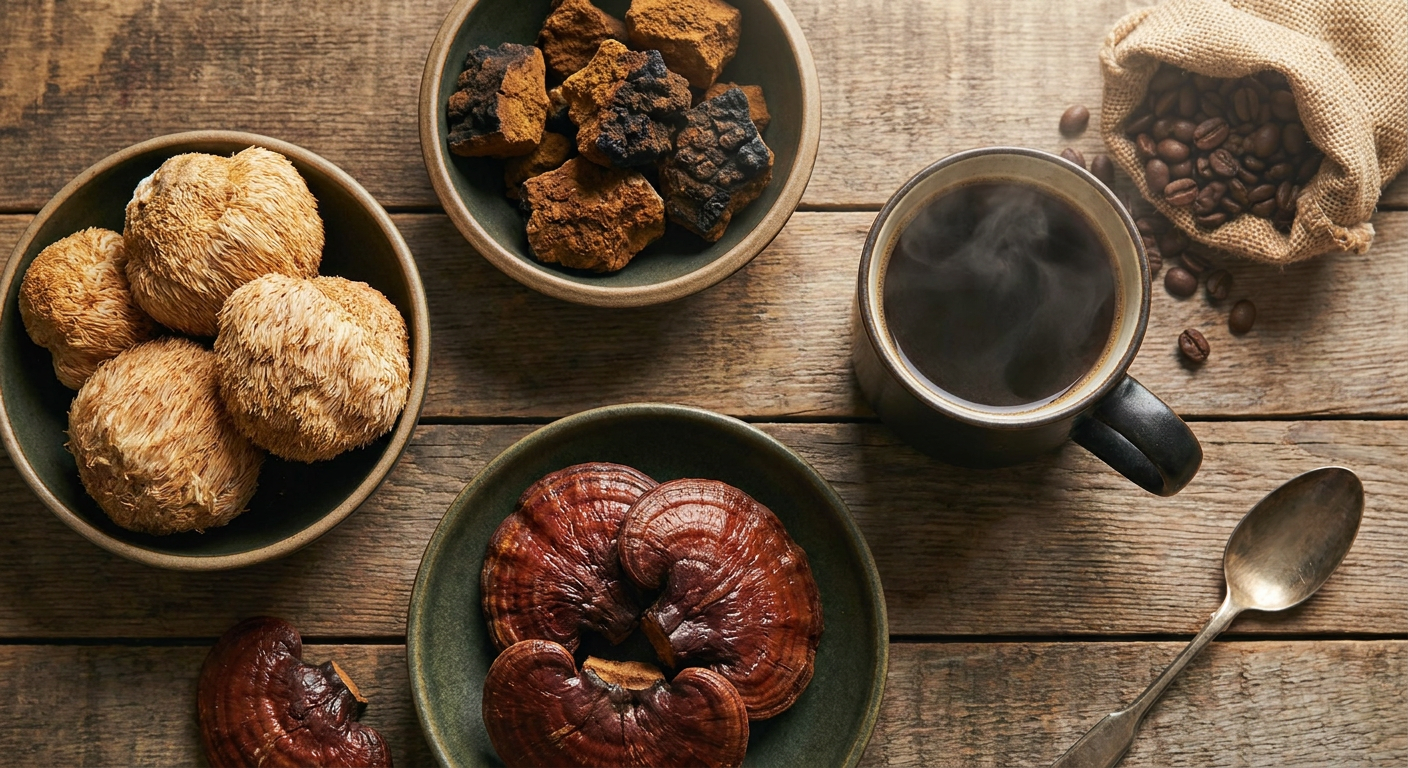
Mushroom coffee is one of the fastest-growing segments in specialty coffee. But what is it, does it actually taste like mushrooms, and are the health claims real? Here is an honest, science-backed breakdown.
What Is Mushroom Coffee?
Mushroom coffee is regular coffee blended with powdered extracts of functional mushrooms — typically lion's mane, chaga, reishi, cordyceps, or turkey tail. These are not culinary mushrooms (no portobello or shiitake). They are adaptogenic fungi that have been used in traditional Chinese and Ayurvedic medicine for centuries. The extracts are dried, concentrated, and ground into a fine powder that blends seamlessly into roasted coffee.
What Does It Taste Like?
This is the question everyone asks first. The answer: it tastes like coffee. Good mushroom coffee is formulated so the earthy mushroom notes complement and deepen the natural flavors of the roast rather than overpower them. Most people describe a slightly richer, more grounded, chocolatey flavor. If you are brewing a quality medium roast with lion's mane and chaga, you will notice a smooth, rounded cup — not a mushroom taste.
Lion's Mane: Focus and Cognitive Function
Lion's mane (Hericium erinaceus) is the most studied functional mushroom for brain health. Research shows it stimulates production of nerve growth factor (NGF), which supports the growth and maintenance of neurons. Studies in older adults with mild cognitive impairment showed improved cognitive function after 16 weeks of supplementation. For coffee drinkers, lion's mane pairs well because it may enhance the alertness caffeine provides while supporting sustained focus without the jittery crash.
Chaga: Antioxidant and Immune Support
Chaga (Inonotus obliquus) grows on birch trees in cold climates and has one of the highest antioxidant concentrations of any natural food — measured by ORAC score, it far exceeds blueberries, acai, and dark chocolate. Chaga is rich in beta-glucans, which modulate immune function by activating macrophages and natural killer cells. It also contains melanin, betulin, and triterpenes that show anti-inflammatory properties in laboratory studies.
Reishi: Stress and Sleep
Reishi (Ganoderma lucidum) is called the "mushroom of immortality" in traditional Chinese medicine. It is classified as an adaptogen — a compound that helps the body manage stress by regulating the HPA axis (hypothalamic-pituitary-adrenal). Human studies show reishi can reduce fatigue, improve sleep quality, and lower self-reported anxiety over 4–8 weeks of use. In mushroom coffee, reishi helps offset the cortisol spike that caffeine causes, potentially making the energy feel calmer and more sustained.
Cordyceps: Energy and Endurance
Cordyceps (Cordyceps militaris) has been used by athletes for its reported effects on oxygen uptake and ATP production. Research suggests it may improve VO2 max (aerobic capacity) by enhancing cellular energy metabolism. For coffee drinkers, cordyceps adds a physical energy dimension on top of caffeine's mental stimulation. It is particularly popular in pre-workout coffee blends. Studies show the most benefit comes from consistent daily use over several weeks rather than acute single doses.
Reduced Caffeine, Smoother Energy
Many mushroom coffee blends contain less caffeine per serving than regular coffee because the adaptogenic mushrooms provide complementary energy support. A typical mushroom coffee blend has 50–80mg caffeine per cup versus 95–200mg in regular coffee. The lower caffeine combined with the calming effects of reishi and the focus-enhancing properties of lion's mane often produces what users describe as "clean energy" — alert and focused without the jitters, anxiety, or afternoon crash.
What to Look For
Quality varies enormously in the mushroom coffee market. Look for: dual-extracted mushroom powder (hot water + alcohol extraction captures both water-soluble beta-glucans and fat-soluble triterpenes), fruiting body extract (not mycelium grown on grain, which contains mostly starch), third-party tested for heavy metals and active compound concentrations, and a meaningful dose (at least 500mg of mushroom extract per serving). Avoid products that list "mushroom flavor" or use proprietary blends that hide the actual amounts.