How Altitude Affects Coffee Flavor
6 min read
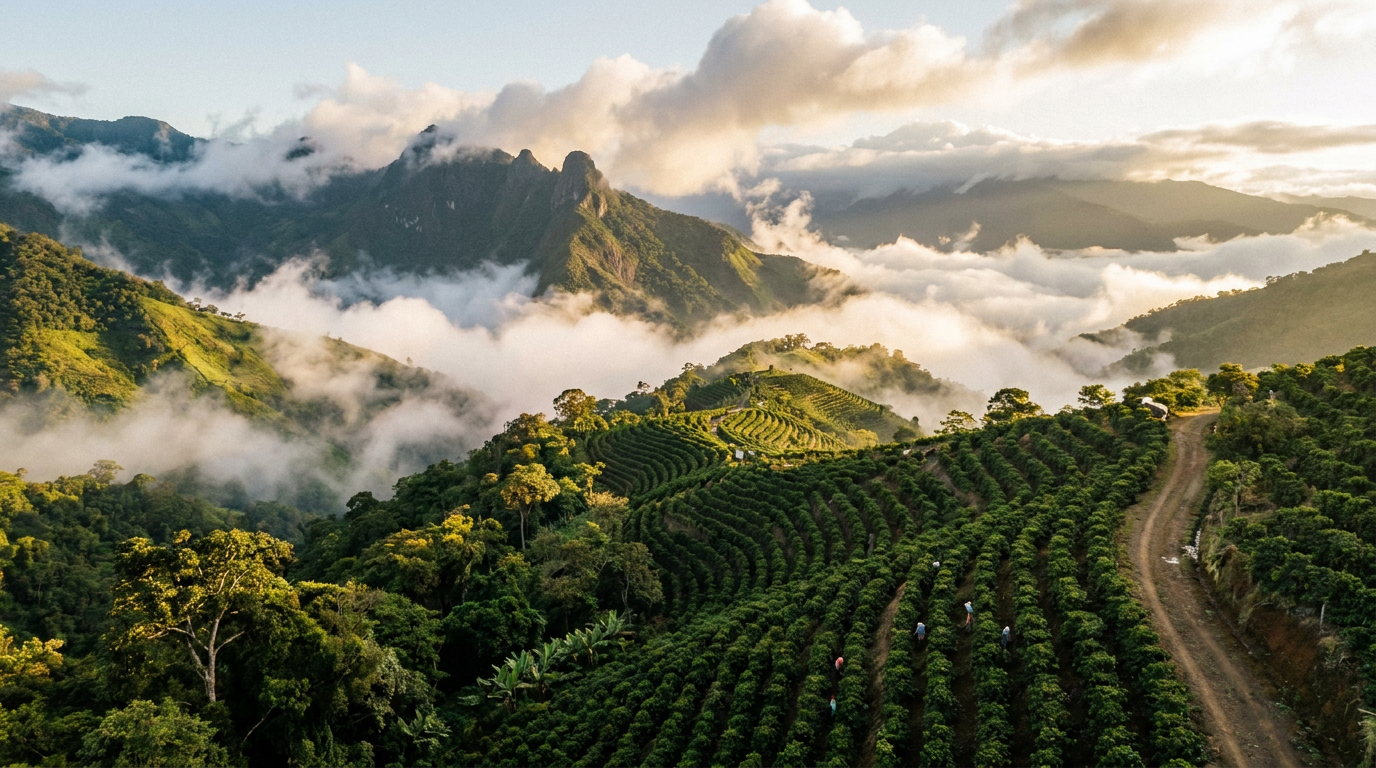
In specialty coffee, altitude is one of the most important quality indicators on a bag. Higher-grown coffees consistently score better in cupping evaluations. But why? Here is the science behind how elevation shapes everything in your cup.
The Simple Rule
The higher the altitude, the denser, harder, and more complex the coffee bean. Cooler temperatures at elevation slow the maturation of the coffee cherry, giving sugars, acids, and aromatic compounds more time to develop inside the seed. This extended development period is the primary reason high-altitude coffees taste more nuanced, sweeter, and more vibrant than lowland coffees.
Temperature and Development
For every 200 meters of altitude gained, average temperature drops about 1.2°C (2.2°F). At 1,800 meters, a coffee cherry takes 8–9 months to ripen versus 5–6 months at 800 meters. This slower metabolism allows the plant to convert more starches into complex sugars and develop a wider range of organic acids (citric, malic, phosphoric) that translate into the brightness and sweetness specialty drinkers prize.
Bean Density and Hardness
Slow growth at altitude produces beans that are physically denser and harder. Dense beans contain more concentrated flavor compounds per gram. They also roast more evenly — the tight cellular structure allows heat to penetrate uniformly. This is why high-altitude beans are graded as "Strictly Hard Bean" (SHB) or "Strictly High Grown" (SHG) in many producing countries — a quality designation that commands premium prices.
Altitude Tiers and Flavor
Below 900m: mild, soft, low acid, simple flavors (often used in commercial blends). 900–1,200m: sweet, smooth, moderate complexity (good everyday specialty coffee). 1,200–1,500m: bright acidity, citrus and stone fruit notes, clean finish (classic specialty range). 1,500–1,800m: complex acidity, floral and tropical notes, wine-like body (competition-quality). Above 1,800m: intensely aromatic, exotic fruit, jasmine, bergamot — the most prized and expensive lots.
Notable High-Altitude Regions
Ethiopia (Yirgacheffe, Sidama): 1,700–2,200m — floral, citrus, blueberry. Colombia (Huila, Nariño): 1,500–2,000m — caramel, red fruit, juicy acidity. Kenya (Nyeri, Kiambu): 1,600–1,900m — blackcurrant, tomato, winey complexity. Guatemala (Huehuetenango): 1,500–2,000m — chocolate, stone fruit, spice. Panama (Boquete): 1,400–1,800m — home of the legendary Gesha variety.
Altitude Is Not Everything
While altitude is a strong quality indicator, it interacts with many other variables: latitude (equatorial regions can grow quality coffee at lower altitudes because temperatures are consistent year-round), shade cover, soil composition, variety, and processing method. A well-processed natural from 1,200m in Brazil can be more interesting than a poorly processed washed coffee from 1,800m in Colombia. Use altitude as a guide, not an absolute rule.
What to Look For on the Bag
Quality-focused roasters include altitude on their labels — usually in meters above sea level (masl). As a general guideline for Arabica coffee: look for 1,200m+ for good specialty quality and 1,500m+ for exceptional complexity. If the bag does not list altitude, it is likely a commodity-grade coffee or blend where elevation was not a selection criterion.