Best Coffee-to-Water Ratio for Every Method
6 min read
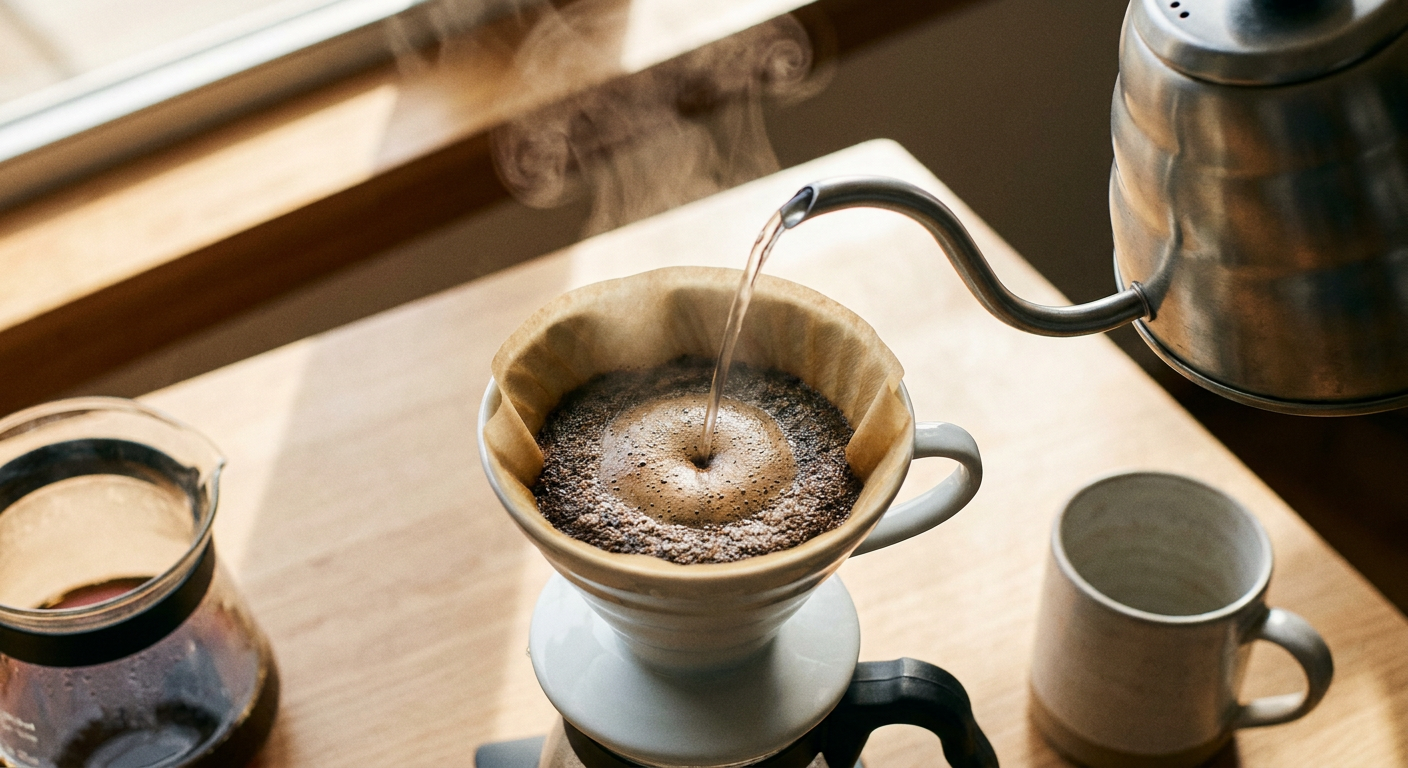
The ratio of coffee to water is the single most impactful variable you control. Get it right and even average beans taste good. Get it wrong and premium beans taste terrible. Here is the definitive guide to ratios for every popular brewing method.
Why Ratio Matters More Than You Think
Coffee brewing is extraction — dissolving soluble compounds from ground coffee into water. Too little coffee relative to water (a weak ratio) over-extracts the grounds, pulling bitter and astringent compounds. Too much coffee (a strong ratio) under-extracts, resulting in sour, underdeveloped flavors. The right ratio ensures you extract 18–22% of the coffee's soluble mass — the sweet spot where the flavors are balanced, sweet, and full.
The Universal Starting Point: 1:16
The Specialty Coffee Association recommends 1:16.67 (55g coffee per liter of water) as the golden standard for brewed coffee. In practical terms, 1:15 to 1:17 is the range most people find ideal. Use 1:15 if you prefer stronger coffee, 1:17 for a lighter cup. This is your baseline — dial up or down from here based on personal taste. Always measure by weight, not volume, because coffee density varies.
Pour Over (V60, Chemex, Kalita)
Ratio: 1:15 to 1:17. For a single 12 oz cup, use 22g coffee to 340g water. Pour over benefits from the higher end of the range (1:16–1:17) because the paper filter produces a clean, light-bodied cup — a slightly weaker ratio lets delicate flavors come through without tasting watery. Chemex specifically benefits from 1:16 or 1:17 due to its thick filters that trap more oils.
French Press
Ratio: 1:15 to 1:16. The French press is a full-immersion brewer with a metal filter that allows oils and fine particles into the cup, producing a heavy, rich body. Use a slightly stronger ratio (1:15) to match this body. For a 34 oz French press, use 60g coffee to 900g water. Steep 4 minutes, then plunge and pour immediately to avoid over-extraction.
Espresso
Ratio: 1:1.5 to 1:2.5. Espresso uses dramatically more coffee relative to water. A standard double shot uses 18–20g of finely ground coffee to yield 36–50g of liquid espresso. This concentrated extraction under pressure is what produces espresso's signature intensity and crema. Start at 1:2 (18g in, 36g out) and adjust. Longer ratios (1:2.5) taste brighter; shorter ratios (1:1.5, called a ristretto) taste sweeter and more intense.
AeroPress
Ratio: 1:12 to 1:16. The AeroPress is uniquely versatile — you can brew espresso-style concentrate (1:12) or a clean filter-style cup (1:16) by adjusting your ratio and grind. For a standard single cup, 15g coffee to 220g water (roughly 1:15) with a medium-fine grind and 1.5 minutes of steep time produces a balanced, smooth cup. The AeroPress is forgiving, so experiment freely.
Cold Brew
Ratio: 1:5 to 1:8. Cold brew uses a much stronger ratio because the cold extraction is less efficient — cold water dissolves fewer compounds than hot water. For concentrate (diluted before serving), use 1:5. For ready-to-drink cold brew, use 1:8. Steep 16–20 hours in the refrigerator. The concentrate approach is more practical because you can adjust each serving to taste.
Moka Pot
Ratio: approximately 1:7. The moka pot has a fixed chamber size, so the ratio is largely determined by filling the filter basket level (without tamping) and filling the lower chamber to just below the safety valve. For a 6-cup moka pot, this is roughly 25g coffee to 180g water. The result is strong, rich, and concentrated — not quite espresso, but bold enough to drink as a short cup or dilute into an Americano-style drink.